Friday, October 5, 2018

Denver Edmonds-Bruno Barbey "Nigeria" *post 6*


1)  Technical decision and why I'm compelled/moved by said tech decisions?
I enjoy this body of work because of the attention to lighting. Within the first photo, the aperture is small, which creates a mystic environment and reflective surface on the water.  The exposure changes within the series, but the photos are never bright. This allows viewers to interpret a mood for the photo. Lighting obviously changes the way images are viewed and Barbey focuses on how it portrays the subjects of Africans in Nigeria. Lastly, I admire the attention to color because each composition contains what seems to be a composed color scheme. Even though Barbey did chose the composition of the photos, I feel as though the color schemes speak to the culture and beauty of Nigeria.  

2)  What I believe the artist's intentions and concept are?

I think Barbey wanted the audience to see the shift of Nigeria after the oil boom. Throughout the series, the audience can see how the community heavily relied on their culture during this period of change. Festivals and celebrations are reoccurring images, the culture is lively and so are the people. It seems as though Barbey wanted to show a time of prosperity through unity. There are barely photos of a single person because the community seems to be very compact.  

3)  How do I personally respond to the intentions and concepts?
I enjoy this pieces because it gives me insight to culture and a period of time I do not know too much about. I try to expand my knowledge of time and culture throughout all of history, especially when it pertains to black people. I feel as though this piece is significant because Americans typically have a misunderstanding of other cultures (especially during the time of this series and especially of Africa). 


4) Why I chose this artist?
I try to stay fluent in my knowledge of black photographers, which causes me to pick one for each post. Yet, I was drawn to Barbey because of his attention to composition and how it affects the image of culture and blackness. Even still, blackness in Africa and America are extremely different. I think Barbey captured that with these images. I also chose this artist because it is the first series I have personally seen about Nigeria. I am also trying to be well versed in my knowledge of black countries and their history, since it is something that is limited in my American education experience. 

Jon Feinstein - Niko Fernandez post 5


Feinstein's way of telling a story for himself using these tree's as sort of witnesses to the things he experienced moving across the country was extremely interesting. You see a change of scenery but in every photo there is one large tree that stands out in the composition and these I feel to him were some what representative of comfort and also a symbolism for a guardian that accompanied him in his struggle of dealing with his mother with Alzheimer's 

I think his intentions with this were to share a experience though this series. The constant change of scenery and dealing with a mentally ill mother as if he only found constancy within these towering trees.

I personally love these choices I feel like I can relate to looking for something constant to keep you grounded and his way of sharing this experience with us connects well with me. I also feel like this series works as a representation of self and he may himself identify within these tree's due to them being witness to his childhood experiences.

Schuyler VanSyckle - Bego Anton - Post 6

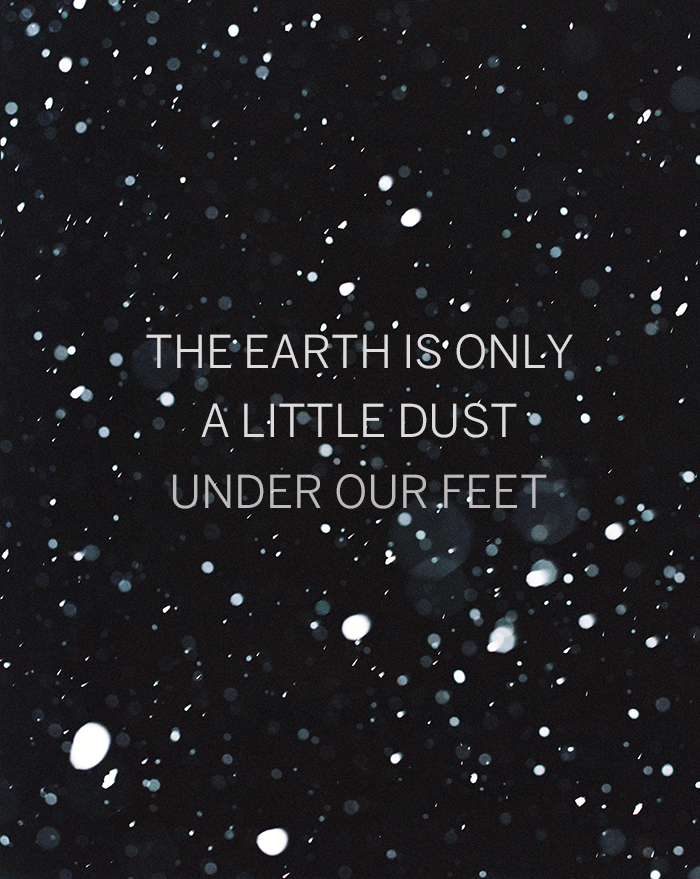
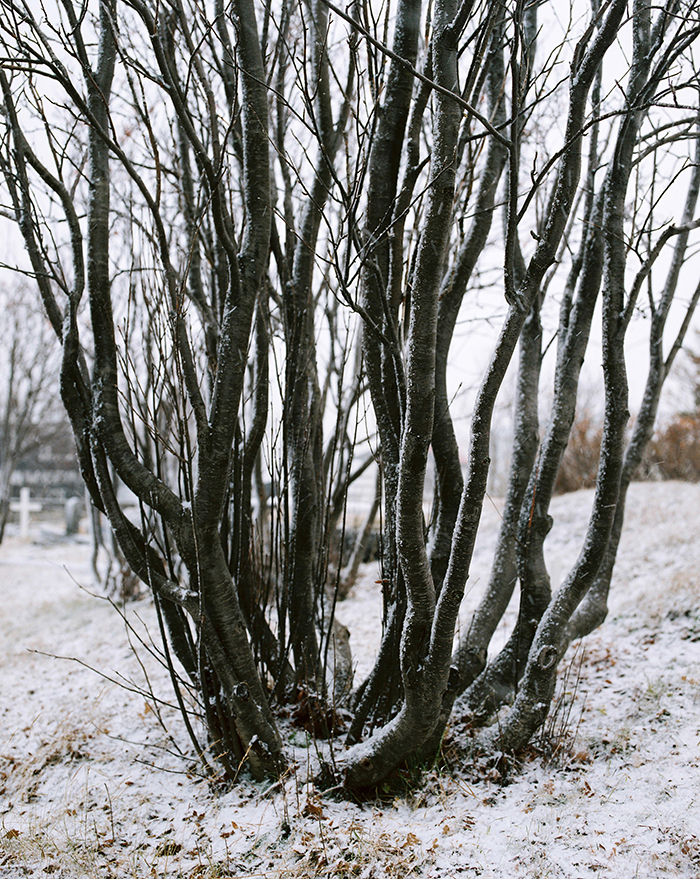
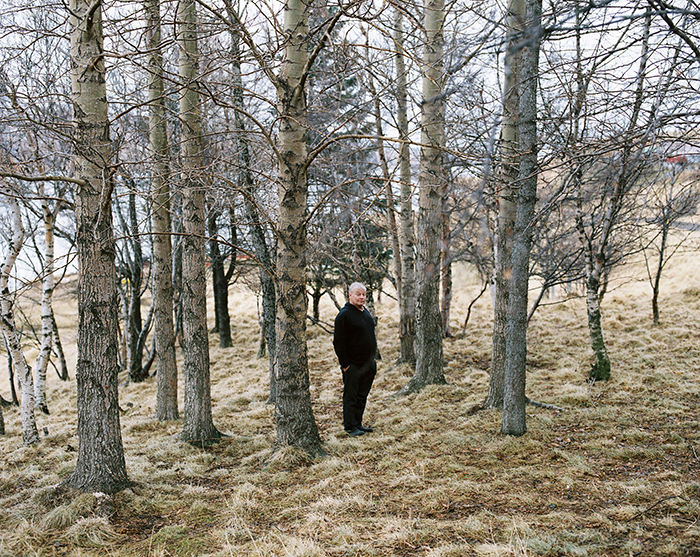
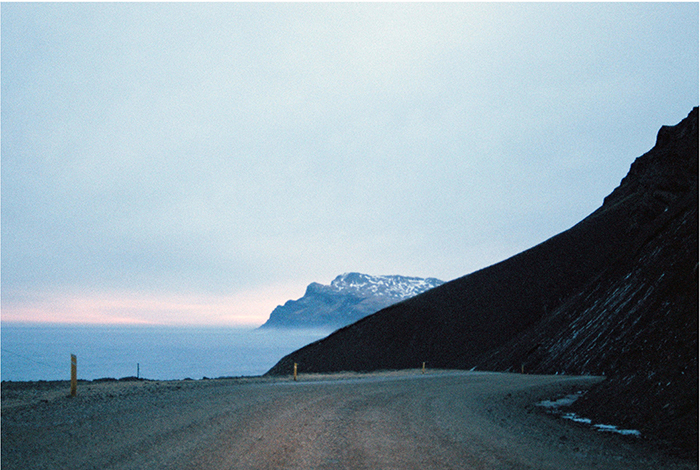
DUST   arbol
culebra
29_troll-1

"Days under our feet" ---By Bego Anton

1. Which of the artists many technical choices are of interest to you?

What interest me the most is that Bego started his series of photos off with a quote. By doing this it gets the viewer thinking which leads them to view your photos with much more thought and helps your photos contain more meaning. 

2. What do you believe are the artists conceptual and/or thematic intentions?

I believe that Bego's intentions for these photographs was to bring attention onto the things we take for granted the most on this earth. Simple every day/year round things that we never take time too appreciate like trees, snow, mountains , and clouds. "The earth is only a little dust under our feet" is such an understatement yet reins so true in how little we appreciate the earth and all the beautiful things it contains. 

3. How do you personally respond to these choices and intentions?

I personally relate to Bego's intentions on how often I think of earth as a little dust that I take for granted. Looking at these breath taking images of the earth helps remind me that earth is something that we should appreciate more. 

Thursday, October 4, 2018

Reuben Wu - Nicole Plummer Post 5


“Exploring a place at night and in solitude enriches the experience of discovery for me.” Wu’s choice to go into nature at night and record a drone flying in circles over and over above random rock structures is absolutely fascinating to me. His choice of minimalist landscape/sci-fi landscape is not only a very challenging decision, but also, a well executed choice on his compositional part.

Besides being visually sci-fi, I don’t see much of a strong evident theme, yet conceptually, it feels never ending. A sense of peace is obviously present due to the calmness of the image as the rough mountains almost appear to melt. Continuing, the glowy halos could mean anything for anyone: a vision, life, afterlife, etc. I imagine Wu could be making a nod to when robotic life will officially intertwine with the earth and life we know now.

Prior to understanding the technical aspects of Wu’s Lux Noctis collection, they had a mesmerizing effect on me. After snapping out of the moment, I noticed how extremely detailed the images were and how beyond life they seemed. I had to understand the process. His choice to use drones blew me away, as of recent, I have become fascinated with drones and their images, but never had I imagined using a drones’ light to draw with. Incredible. Just goes to show me how going out of comfort zones and breaking boundaries can produce the most astounding images.

Alec Castillo - Abby Chambers - Post 6


1) Which of the artist’s many technical choices are of interest to you and why? 

What drew me into Alec Castillo's work is how informal it feels. It feels like snapshots of memories someone made with their friends. Each photo has it's own style, but I really like the composition of each of them. Even though they feel very informal, they're composed very well in my opinion. 

2) What do you believe are the artist’s conceptual and/or thematic intentions?  

Castillo just likes to make pictures of his friends. He goes on tour with his friends in the band "The Nude Party" and he makes pictures of them having a good time. I think he's just trying to capture moments. 

3) How do you personally respond to these choices and intents?  

I personally enjoy his work very much. I think it's very impressive that he can make pictures look this well composed when he's just taking candid shots of his friends having fun on tour. I really like the idea of capturing memories and I think that's exactly what Alec Castillo is trying to do.

Amber Carpenter - Jocelyn Lee - Post 6

1. Which of the artist's many technical choices are of interest to you and why?

I like their use of lighting and colors, they seem to stay at a medium depth of aperture to minimize a shallow depth of field. Their colors are also of interest to me, as I find a very minimal contrast as they bring out the darks and blacks in the photos to remind me of film. I also enjoy how they position and use their models in their photos, its less senior portrait photography and more conceptual photography and thats what I wanna strive to achieve. Theres such a natural feeling to their photos that make them all feel so candid or not forced. 

2. What do you believe are the artist's conceptual work and/or thematic intentions?

The photographer seems to have a running theme with women, and youth. Theres a lot of coming of age themes in her work that I enjoy and resonate with. I would like to see her photograph other types of people as well and maybe not just younger women. I enjoy their use of nudity and the female body as its not through a male gaze lens and more through an artistic one. I think they intend to have a very natural use of a model in their photos as none of them seem forced and very fluid.

3. How do you personally respond to these choices and intents?

I really want to achieve a look like this photographers, to me her photos are very conceptual and have a personal feeling to them. These photos all have a mood that resonates with them as if you can imagine the stories of the people behind them. These inspire me and id like to go try to make photos that give me the same feeling her work does.


Brezaja Hutcheson - Petra Collins - Post 6

1. Which of the artist's many technical choices are of interest to you and why?

In all honesty, Collins' work does not peak my interest.  I say this because when I view her portraits, many of them have evoked emotional little response from me, if any. While I do believe that some of her works are intriguing or aesthetically pleasing, they do not reach me on a level that I feel other works from artists that I listed before have.  It is almost as if there is a flatness to them, especially when she photographs people of color.  There is not a lot of depth to them, nor consideration as to how their skin looks under certain lighting, which causes them to look washed out.  Not all of her portraits of people of color look like this, but I feel that she tends to do this more often than not.

In her defense, this seems to be her style, but I personally do not respond to them in a  way that inspires me to create art like it or to take technical elements from her photographs and use them as inspiration for my own. 


2. What do you believe are the artist's conceptual work and/or thematic intentions?

Collins does a lot of editorial work, so I feel that her portraits and shoots are more geared towards that.  Conceptually, she looks soft light, reflection, and colors that are saturated with a slight fade or little contrast.  I believe that she is trying to create a feeling of lightness and airiness about her photos, which comes across through her compositions and lighting choices.  Collins plays with themes of softness and fragility, which is why I believe that she has received such praise in her photos, because she seems to capture the same qualities in the subjects that she depicts.

She usually depicts her subjects wearing fashionable clothes that are flowy and decorative, and then outfits that they wear usually reveal something about their personality, whether it be their interests or if they tie into their identity as an individual.


3. How do you personally respond to these choices and intents?

I believe that I can take certain technical bits from her photos and use them as inspiration, however for the most part, I do not consider Petra Collins an artist that I constantly reference when thinking about portrait photography and my own goals as an artist. I think that while her photos may have that effect on many other people, the goals that I have when I am photographing subjects, landscapes, or whatever else is slightly different. I am more interested in stripping away a layer between the subject and the photographer to get more of a deeper connection between the viewer and the subject, and to have their vulnerabilities show a bit.

However, just because I do not respond to her works personally does not mean that they are not interesting. I just believe that I have a different objective in mind when I think about pursuing a career in photographing people.


Mariela Gavino - Jake Verzosa - Post 6


Jake Verzosa

The Last Tattooed Women of Kalinga -- In the Philippines

In Verzosa's portrait series, his consideration of soft lighting as well as composition presents the viewer with a concentrated moment with subjects. Each subject is evenly lit, no dramatic spot lights or shadows. We can see their tattoos clearly as well as their faces. Verzosa could have zoomed in on only the tattoo's, but he instead composes them in traditional portraiture to represent the women as well. His simple display of these women apart from their environment allow their skin to tell a story without any context of where they come from. 

Verzosa is presenting viewers with a rare glimpse of women who following a dying indigenous tradition. There is a sense of pride and belonging in the women displayed,  but there is also melancholy. Showing old women emphasizes the timeline and context of these traditions. It also displays the development in culture and taboo. Women in the Philippines today rarely have tattoos and it has gone on to become disapproved. Versoza is making these portraits to inform people about the tradition of this tribe, taboo, as well as a call to possible save the dying, hidden tradition.

I was very personally impacted by these photos and how they were captured. I was born in America but my family is from the Philippines. In these photos, the women reminded me of my Lola (grandmother). It made me think about all the times she disapproved of my own tattoos and how it was "very American" of me. It made me consider the deep roots of my Filipino culture and its relationship with tattoos and body modification and how colonization has changed it. The display of their tattoos and bodies still evoked a sense of pride in me as well though. I read their faces carefully and their skin and could see how the photos are celebratory but also mournful. I felt that Verzosa's considerations in making pictures of these women made their story and tradition more meaningful and personal rather than documentary.


Ruben Pagan - Lou Raizin - Seasons of Solitude


The artist's technical choices are the main reason why these photos work so well and give off the mood that they do. Each image was carefully composed with the goal of achieving a sense of solitude. This idea was portrayed by the artist, Lou Raizin, by capturing images of his subject from far away making them seem minuscule and alone solely amongst themselves and the ambiance of nature in the winter. The fact that he also used nature, which is often seen by us as a place where one can visit to be free from our ever so overwhelmingly technological world, amplifies the conceptual meaning behind these photos. The manner in which he also had people standing next to these trees that seem so small when they're alone, makes us humans realize that we're actually ever so smaller that even these trees and everything else that is more important in the whole universe.

It is clear that Raizin's intentions are to make the viewer feel the sense of solitude that the images are intending to show. He makes this possible through keeping each image simple and giving the viewer less to deal with so that they can focus more on the concept that is he is trying to make them aware of. Also, when he displayed this set of work in the Modernbook Gallery, the prints were only 5x6 inches. This display technique helps emphasize the simplicity and feeling of loneliness.

The choices that the photographer made make me feel like I'm in my happy place which is out in nature. Specifically, the beaches and jungle environments in Puerto Rico. I enjoy being the only person on the beach in the mornings walking along the shore while I wait for my grandmother to make breakfast for the family. The feeling of loneliness he is trying to show, I was able to feel and relate it to myself. It is important to realize that sometimes we need to get away from the industrial advancements of our generation. 

amanda burton- Bonnie Hansen post 6


1.Which of the artists many technical choices are of interest to you and why?
The biggest technical choice Bonnie makes with her photographs are very close up portraits. I was very in awe  when I saw this pattern from her. With her models also being female, the closer she gets to then, the more beauty is portrayed. The color in the eyes, the long eyelashes, the creases in the lips, each strand of hair in the eyebrows, and so on.

2. What do you believe are the artists conceptual and/or thematic intentions?
I believe her intention is to have some sort of prop to emphasize the face. Her props can go as far as covering the whole face in diamonds as seen in the first picture, or as small as a simple statement earring. With most of her props she uses them like I have never seen or would of thought to do so before. It grabs my attention towards the detail of the face and I think she does a fantastic job of placing her props appropriately.


3. How do you personally respond to these choices and intents?
I personally think these photos are breath taking. I love to see an up close of the female face. Any photographer can do a portrait like this, but once Bonnie puts her personal touch on it, her photographs become art. I am inspired to try out props I have been fantasizing about using because of how beautiful these photos turn out. I also admire how her props do not have to be expensive to work well.


4. Reason why I chose this artist.
I chose Bonnie Hansen because of her title as fashion photographer. As I looked closer on her social media where she posts her photographs, I immediately felt jealous of how she had thought of taking such images. Not only do her close up fashion pictures catch my eye, but her full body ones as well. Her editing and use of studio light makes me want to learn more about her technique. When reading her bio I was very excited to know she is from Australia where most styles of clothing I like come from. Plus her background in advertising, she understands what choices she needs to make with her photographs to make them excellent. 


Hana Pearlman Post 6- I still do, by Judith Fox

1)  I was really compelled by the intimacy and the sadness captured in each image. Each picture was made of the same person and was made with the same tones and contrast, they all are very well balanced. I enjoy the contrast of the skin and all the details within the skin. 
2)  Upon reading a little bit more about the images and her project, the images are all about her husband being diagnosed with Alzheimer's disease. The second picture is the strongest image in my opinion. It's such a raw and intimate moment between the two individuals. To me, this picture shows the broken down barrier between to people, someone letting their guard down completely, letting an image like this be created, and that is truly moving to me. 
3)  I find these images to be so saddening and also so beautiful. They evoke such passion and emotion because you can see the care and the thought that was put in to each image. The last image is composed in such a beatiful way, that this action feels almost elegant in a sense. The hands wrinkled with age and worn with time, contrasting against the new white cotton shirt, and the accent of the wedding ring makes this picture increibly compelling.