Wednesday, August 28, 2013

Charlotte Laurance


What do I care about? The time spent with the people I care for, in the places that mean the most to me , and the possibility that at any given moment, that could all disappear. I care about certainty.


"In life and death, you always stole my heart."
- Bayside


I think that these photographs speak to my interest in conserving time and memory 

Pictures from my past

What I Care About: standing out as a student and making people notice me as someone to be noticed.


Tuesday, August 27, 2013

Awesome black and white photographers

I was mindlessly searching the internet and found this awesome photography duo, Robert and Shana ParkeHarrison. Here's their website: http://www.parkeharrison.com/
Take a look!

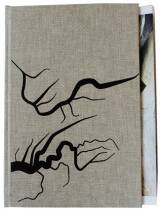
Not just a book review - Two Rivers by Carolyn Drake

I was fortunate to have met Carolyn Drake in person when I attended an one semester workshop at the renown Salt Institute for Documentary Studies in Portland, ME. In fact, Carolyn is the girlfriend of the photo teacher who taught at that institute.

Not only do I admire her work and style but also her as a person.
Even though she has worked for Time, the New Yorker and is now a full time staff for National Geographic, she still always worked on personal projects on the side - which I think is very important for you as an artist in order to always being challenged and pushed to grow.

For the past 5 years she has been traveling to rural central Asia to document the life around two major rivers in that area: The Amu Darya and Syr Darya.


When I view work of art I eventually get to a point were imagine which of the pieces I looked at I would hang up in my own house. With most documentary photography I would have a issue hanging them up. Carolyn's work is different, each of these photographs are bilingual: journalistic and artistic.
I could imagine having her work hanging in my living room, even though I have no idea who the man in the orange car is.

But not only do her photographs and her character inspire me, but also how she closes the circle of her projects. In this case of "Two Rivers" even the design of the book makes so much sense.

When I received the book in the mail, which was a reward for the Kickstarter campaign she set up to publish the book, I thought "something went wrong" in the production... The pages are sticking out too far. Or the cover is not big enough. But once you start to flip through the book it all in a sudden makes total sense why she chose to design the book this way.

But I will let you paint your own picture, I will bring a copy of the book to class tomorrow and you can see for your self.


Monday, August 26, 2013

Sally Mann

Sally Mann was born and raised in Lexington, Virginia. She still resides and works there. Since the 1970's, the South has been a main theme in Mann's photography. She is best known for her Southern American landscapes and her intimate, evocative portraits of her family. She has experimented with color but finds that her niche is in black and white photography with its antique technology.

Sally Mann was named "America's Best Photographer" by Time magazine in 2001. In her work, Mann takes in mind the photographic process of each shot to create her photographs. Her newest series focuses on deep southern landscapes that are shot with broken cameras, some where she must use her own hand as the shutter. The series is a rugged look into the heart of the South that shows the development processes of the 19th century such as light leaks and scratches. Her photographs of her family are taken of everyday moments. They're simple yet they have undertones of larger themes such as the cultural perception of sexuality. Sally Mann's style and techniques have always been of interest to me. I love the thought she puts into such a simple image so that it tells a bigger story. The composition of each image is so carefree yet carefully thought about.


Noah Kalina


One thing Noah Kalina utilizes in his work is harsh and intentional lighting. Lighting can play such an important part in photography and when used in such a unique and very purposeful way, the art takes on another form. The intentionality leads the viewer to think about what is left in the light and what is not, they are lead to think about the mood it creates for the piece, and additionally, they are lead to think upon the techniques the artist used to capture that specific lighting. Kalina is also known for his portraits and how interesting all of his subjects are from what their hair color is to the pose they model in.
The intent of Noah Kalina's work stems from a lot of different things. For example, his project when he took a picture of himself everyday for twelve and half years has something to say for an interest in change and how physical appearances can alter over a long span of time which might lead to artist development. The three works I chose to display lead to concepts about solitude, in my opinion. But there is a lot I don't understand about his work. All I know is that I enjoy looking at it and seeing what Noah Kalina does next. 


Annie Leibovitz


The technical choices that go into Annie Leibovitz's photo shoots are one of the most important parts of her photography. The debt she has racked up has been caused by her technical choices. The amount of money she puts into all of the equipment/technology is what really creates her images. Even with this weight over her head, she continues to put in money she does not necessarily have to create the image she has in mind. She uses studio lighting indoors and outdoors to cast the mood for her shoots. Leibovitz also does a great job at capturing the moments she has in mind with her use of time.

I think that when Leibovitz shoots, she has every single element of the shot she has in mind down to a point. In a documentary I watched, she showed her process of planning out a new photo shoot. Her process has everything and everyone in mind, meaning that she keeps not only herself as a photographer in mind- but the client, model, audience, etc. Leibovitz is a great example of embodying the theme given to her when shooting. For one of her more popular shoots, she shot a "real life Disney princess" set. One part of the set was a 'Little Mermaid' based shoot, where she clearly went very far to get the real looks of mermaids, as well as an underwater kingdom environment.

Sunday, August 25, 2013

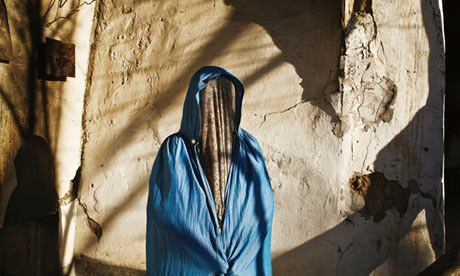
Steve McCurry is an exceptional photographer photographs mainly in the Middle East and Asia. His work has been displayed in time magazine among many others. He is best known for his portraiture. In his work he shows hardship, culture, and beautiful scenery. All of his photos have a lot of depth, and have piercing colors. The lighting is usually very intense and dynamic.
What drew me to Steve’s work was the rawness of his photographs; they seem rather unplanned and “un-primped”, while still having a striking artistic effect. Many of his shots are simply snap- shots of people’s lives- but through vivid color and striking perspective (many photos are extremely up close and personal) there is emotion and narration behind the photo.  I think that Steve’s greatest skill is evoking emotion in the viewer. Looking at every picture , I can feel the emotion that he has purposely portrayed.


The Wade Brothers


1) the artist’s technical choices and 2) the artist’s conceptual and/or thematic intent.  Consider this your introduction to thinking and writing about photography.

When looking into The Wade Brothers I was immediately attracted to how the photographs looked ascetically. Each series is carefully planned out because the photographs amongst them have been used to create artistic ads for Gatorade, lifestyle brands, Reebok and USA Today. Each series has very close attention paid to the technical aspects. There is a good use of lighting, exposure effects and composition. Conceptually these photographs are used in ads and some editorial shoots.


Jumping from the ad-like photo shoots, I stumbled across another series called "Room 107" where the photographs depict all of the different scenarios that can/will/have occurred in a semi run-down hotel room. Everything from rockstars crashing the room, to a drug deal gone bad. I really enjoy the Wade Brothers work because it feels similar to my photographic aesthetic of capturing what is happening in real time. I enjoy feeling like I am actually brought into the photograph, much like how writers paint a picture in your mind with their written stories.

Kate Kinley


Kate Kinley manages to take something dainty, dare say feminine, and show a darker side to it. The images heavily rely on light to highlight the subject matter that Kate wants the viewer to focus on. Centered compositions and self portraits seem to be reoccurring themes in her portfolio. She enjoys playing with different concepts such as scanography, as seen in the third image. Even though her style imitates a now popular style, she still managing to create unique images.  Colors differ but her talent of keeping images soft while administrating high contrast can be seen in almost all her images. 

 The drama is what attracts me to Kate Kinley's work.  Almost every shot reminds me of visions from slumber, whether it be a lovely dream, or your worst nightmare. My favorite's from her portfolio all share that they are shot with a film camera. The softness further allude's the dreaminess I earlier mentioned. Normally it would bother me that she uses herself for the subject in almost every picture, but with her portfolio, it works and creates a consistency. Her pictures could string together to create a modern day fairytale that I hope never ends. 

Lisa Smit


Lisa Smit is a pretty minimalistic photographer. Her works usually consist of a single subject or a very basic scene setup and often, though not always, symmetry plays a large role in her composition. She plays on the nostalgic through her use of color, using very washed out colors or simply black and white. As far as I can tell, she mainly uses only available light, which gives the feeling of spontaneity.

            Smit’s series of photographs are like an open journal, her whimsical photographs intrigue the viewer but leave you waiting for the rest of the story or allow you as the viewer to make up your own story. Some of her more documentary works seem as just an honest testament to being here and alive. I’ve loved and been inspired by her loose fashion-like style; it was her art that first lead me to shooting analog. 


Lissy Laricchia's photographs initially intrigued me because of the sheer fantasy feel of the photos; she is always concentrating her photographs on the subject matter as opposed to the setting. Most of her photographs are taken in a studio, where she finds creative ways to interest the observers by usually having the model in the photograph doing a unique action. I also very much like her sense of color; I do not see a repetitive color scheme in her portfolio because she likes to experiment with accent 'pop' techniques. 

Saturday, August 24, 2013

Alex Stoddard


First hearing about a teenage photography prodigy a couple years back, I was curious to know what made this Alex Stoddard character so different, so unique.  After further inspection, I realized that these self-portraits weren't means of expressing what others can see from outside, but rather, looking into his mind within; he takes the extra steps to not just capture a moment, but to create one.  Often surreal and abstract, his photographs make the viewers hold their breath, for the images might seem to flee when time passes, but they're secure and present, the way he intended to.

Stoddard takes great care in subtly blending complimentary tones together to ease the audience into looking at the photographs; he also utilizes colors such as red or black sometimes to create focus within the frame, a visual infrastructure.  Although some of the images require editing to convince the other side that what they're seeing is real, Stoddard's works hold weight from calculated placement of objects inside the viewfinder.  

Friday, August 23, 2013

Brian Sparks


The street photographer Brian Sparks immediately astounded me through his use of repetition and subject matter. Yet what seems to be a simple candid photograph is turned into a compelling piece, by using in-camera edits and timing Spark creates a doubling effect through windows. Spark uses high contrast to brighten the white spaces creating a natural frame for the subject. Along with natural framing Spark uses harsh horizontal and diagonal lines that are constantly leading your eyes back into the picture. I admire that his work is centered weighted because some artist live by the 3/4ths rule, which makes photographers who challenge that rule interesting to me.


By successfully using textures and patterns Spark brings interest to a normally bland photograph.  Spark uses “average” people in his photographs but by using birds-eye view it adds importance to each person. Since majority of his photos are seen through this perspective and are center-weighted one feels as if Spark is bringing light to people who we see as unimportant.

Thursday, August 22, 2013

Welcome!

This is your class blog.  It is a wealth of not only future, but past class posts.  Use it!