Sunday, October 2, 2011
Mckay Jaffe
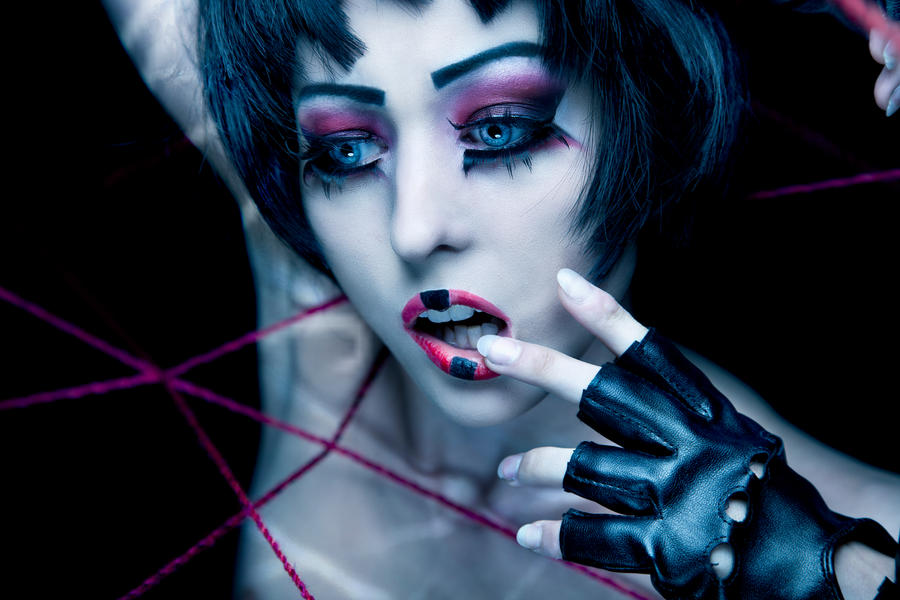
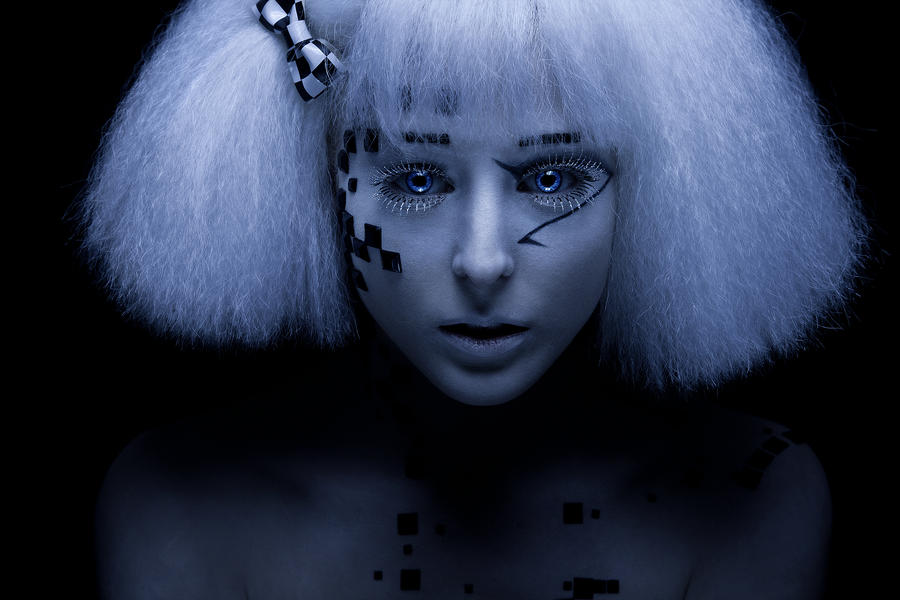
McKay Jaffe is a 25 year old photographer from Phoenix, Arizona. There really isn't much information on him after that, so I'm pretty sure that he's free-lane and likes to keep himself fairly anonymous. His work is pretty varied, but what I've always been drawn to are his portraits. It is very rare for Jaffe to release a straight portrait of a person. There is always extensive makeup, hair, or editing done to the photos. I always found it interesting that every person he photographed was heavily manipulated in some way. It gives me this sense of detachment, as if they aren't even people. The models also keep their faces pretty expression-less, which just adds to the effect.
Pamela Littky


What would be your dream job well tell me if this sounds like it "Photography, even if I wasn't doing it professionally, would totally be a passion of mine. The fact that someone pays me to go to work with a camera to do something that I completely love is pretty amazing." Pamela is living a modo that I fully believe in and that's If you can find something that you truly love to do, and make a profession out of it, then you should go for it." Her work captures that fully not only working with famous musicians but projects that she works on. One project that is really fun is a series that she did totally of polaroid pictures of just candid moments. Her pictures pop to me in so many ways with color, subject angles etc. If you get the chance checkout http://www.pamelalittky.com
Tim Barber


Tim Barber's style is almost contradictory. If someone were to place him in a category he is a editorial photographer. He shoots for companies like Urban Outfitters and Muse. His style is nothing like a typical editorial photographer. He uses super high ISOs and some of his photos look like snapshot-esque. The grain in his photos works in his favor and adds a vintage and haze effect. I thought it was interesting because he broke one of my "photo rules" with having such a high ISO. Researching his work inspired me to break my rule use a high ISO to get that same grain effect. The photo that stood out to me most was the twin towers photograph. When looking at his body of work I almost skimmed passed this photograph until I truly realized the scenario. Talk about being at the right place at the right time. The grainy and haze of the light adds such emotion to the photo. Including the crooked photograph in the corner adds so much tension and drama. Check out his full body of work: http://www.tim-barber.com/
Breaking the Rules
Breaking my Rules and Artist


My broken rules- For these photographs I was sure not to include any portraits. I tried out landscapes which is somthing I don't normally do, and focused a lot on objects with artificial light sources.
David Clifford- He is another commercial-ish photographer that I reallly like. He's done a lot of work with Trail Runner magazine, and National Geographic. While I was working on my breaking my rules assignment, I experimented a ot with artificial light. This helped me appreciate the way he uses his flashes and stobes. A lot of his shots have a really defined light source. He likes to combine the natural witht the artificial.Rule Breaking Photos & Photographer for the Week
Rule Breaking Photos:


Len Bernstein is the photographer I chose for this week. While looking for inspiration for my "Photos that I'm Afraid to Take Project", I found some of his work really inspirational. Len Bernstein has been a photographer for around thirty years. He photographs dramatic scenes in the New York City. His work is street art portraiture, which is so moving not only do you see the surrounding and city life but you see the people living there, what they are experiencing and their emotions through his photos.


Photographer for the Week: Len Bernstein


Len Bernstein is the photographer I chose for this week. While looking for inspiration for my "Photos that I'm Afraid to Take Project", I found some of his work really inspirational. Len Bernstein has been a photographer for around thirty years. He photographs dramatic scenes in the New York City. His work is street art portraiture, which is so moving not only do you see the surrounding and city life but you see the people living there, what they are experiencing and their emotions through his photos.
"Breaking My Rules" & Weekly Photographer


3 Photos:


Weekly Photographer:
Clyde Butcher is like the Ansel Adams of our time. He works primarily in the Everglades region of Florida, capturing the wildlife, but mostly the landscapes and natural phenomenans of a land so destructed by man, but still rich and hidden. He works with mostly 8x10 cameras, and even works with his self-made creation, the Clyde-O-Wide. He captures the essence of the world (that sounds so incredibly corny, I'm sorry), the natural world, that is. He is truly the only landscape photographer that I have come across in recent years worth my time to actually look through all this photos. Here's a cool link to his technical information, related to what cameras he uses, film, etc.
http://clydebutcher.com/technical-info.cfm
Rules were made to be broken.
--------------------------
Allan Sekula was born in 1951 in Erie, Pennsylvania. He studied art and philosophy, among many other subjects, and now works as a photographer, writer and critic of his time. His most recent photographic projects consist in sequences of photographs and texts made in order to critically examine the economic, political, social, and cultural changes wrought by globalization. He shows us how art can be use as another efficient medium to make critical contributions on questions on today's society.
Here are a few of his photographs from the series "Fish Story", a project Sekula put together after spending seven years photographing harbors and port cities around the world, capturing the story and current situation of maritime industries &such.


Saturday, October 1, 2011
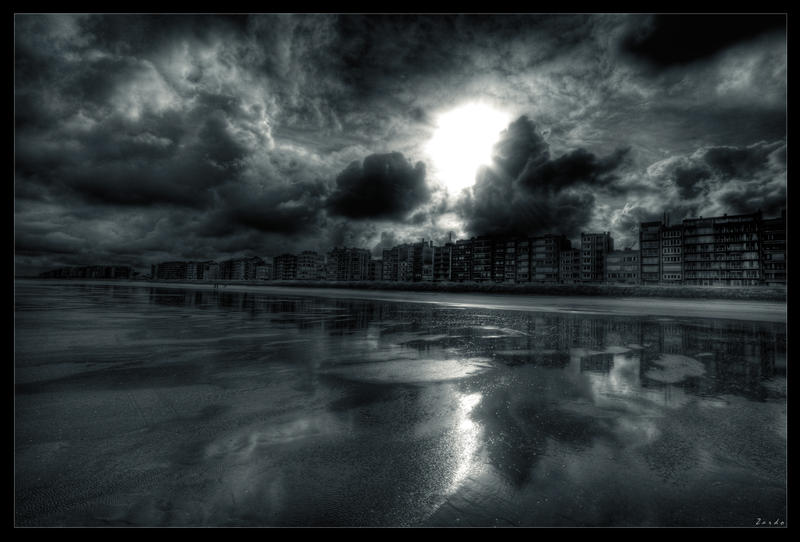
Zardo - AKA Behrouz Riahi
Mr. Riahi, who puts himself/his work under the title, "Zardo" is a self-taught photographer who initially pursued psychology (and I imagine he still does). His Belgian roots influence him somewhat, emulating Begian artists such as Magritte and Delvaux; Tim Burton is also a big influence.
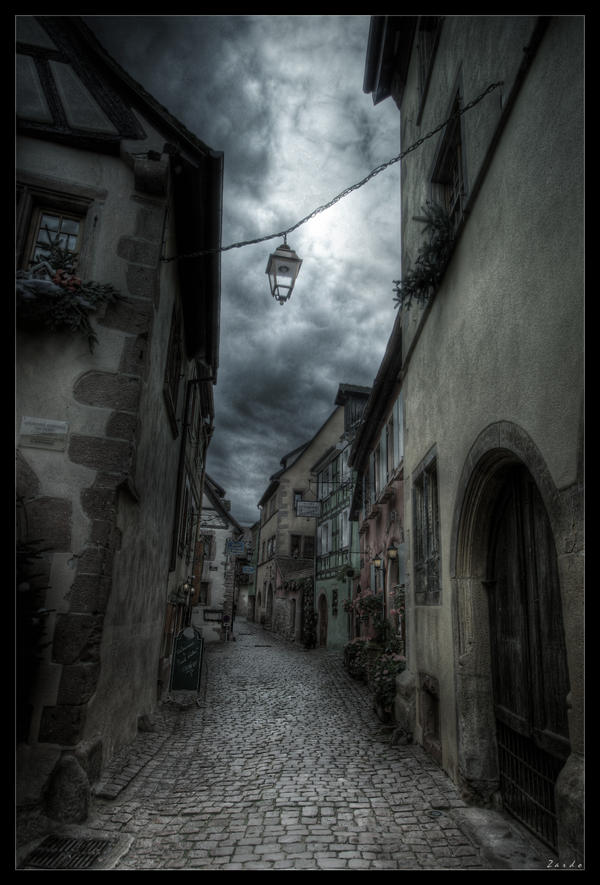
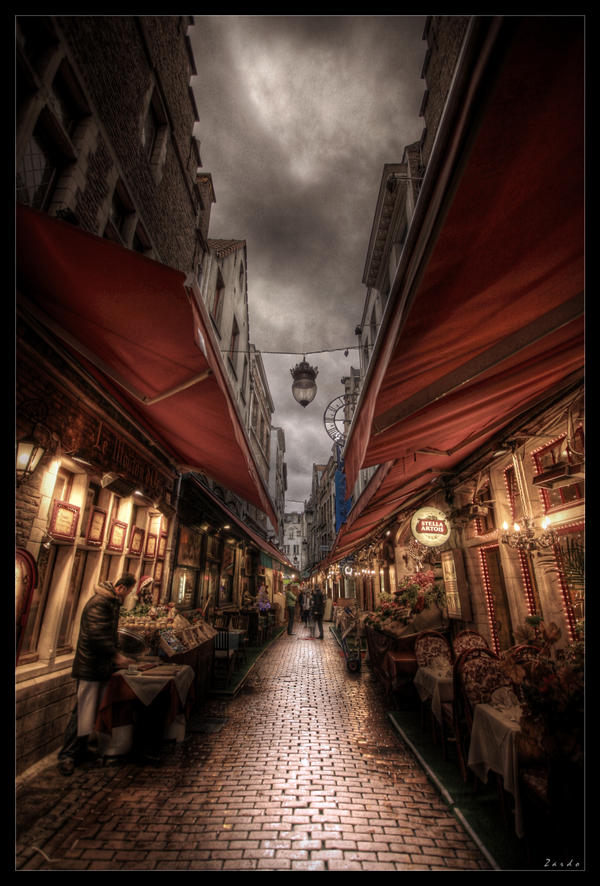
Zardo's work mostly consists of landscapes/architecture, all of which have a dramatic, "epic" look to them. Of course these photos have been digitally altered, but in a way that earns him places in galleries. Strong colors and soft elements make you want to have your breath taken away by the landscapes. The wide angles and wide focal range make everything pleasantly visible. The surreal/drawn & painted feeling makes me think that these places are fictional, but the very-much real architecture or grounded subjects (trees, stones, etc. in his landscapes where there are no buildings) remind me that I could go to these beautiful places myself. His inclusion of menacing clouds/surreal effects are partially what makes these photos so Tim Burton-like; they remind me of Burton's Sweeney Todd: The Demon Barber of Fleet Street. What I find kind of funny is that some photos indicate a strong sun/strong sunlight could be present, but Zardo increases the contrast between the light and the rest of the scene so much that the image is almost contradictory within itself.
One thing that sort of perturbed me was that some of Zardo's photos seemed unbalanced in the way that the camera/image could have been leveled.


Zardo's work mostly consists of landscapes/architecture, all of which have a dramatic, "epic" look to them. Of course these photos have been digitally altered, but in a way that earns him places in galleries. Strong colors and soft elements make you want to have your breath taken away by the landscapes. The wide angles and wide focal range make everything pleasantly visible. The surreal/drawn & painted feeling makes me think that these places are fictional, but the very-much real architecture or grounded subjects (trees, stones, etc. in his landscapes where there are no buildings) remind me that I could go to these beautiful places myself. His inclusion of menacing clouds/surreal effects are partially what makes these photos so Tim Burton-like; they remind me of Burton's Sweeney Todd: The Demon Barber of Fleet Street. What I find kind of funny is that some photos indicate a strong sun/strong sunlight could be present, but Zardo increases the contrast between the light and the rest of the scene so much that the image is almost contradictory within itself.
One thing that sort of perturbed me was that some of Zardo's photos seemed unbalanced in the way that the camera/image could have been leveled.
Subscribe to:
Posts (Atom)